What Should You Wear and Do in Chiang Mai Temples?
6 min read
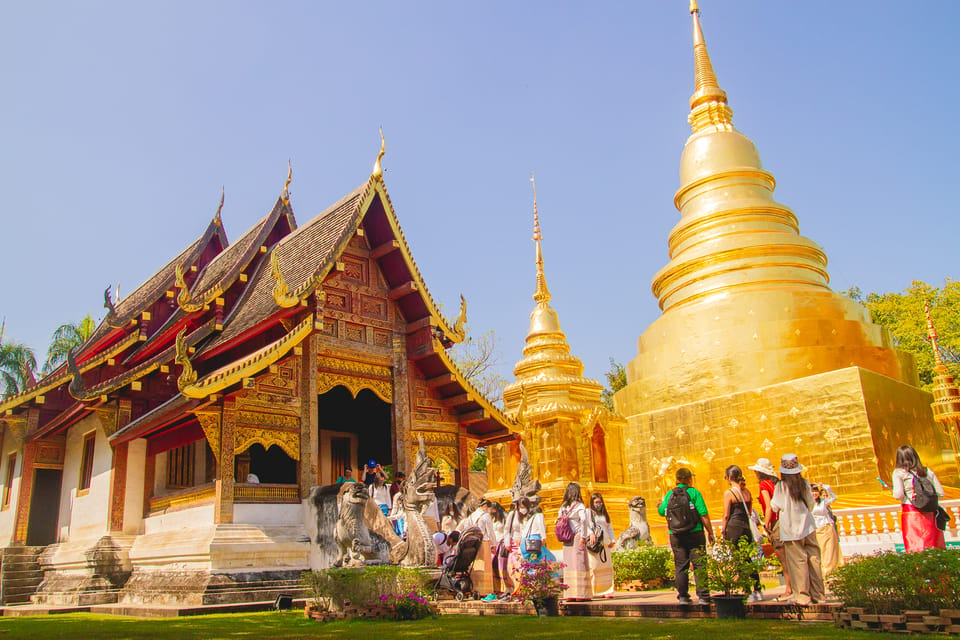
Short answer. Cover shoulders and knees, take off your shoes wherever signs or the line of footwear indicate, keep your voice low and never pose on or climb sacred structures. Rules can differ between the prayer hall, grounds and individual temples, so a sign or an attendant on site outranks any general checklist. If you would rather understand what you are seeing than merely avoid mistakes, the Chiang Mai: 3-Hour Old City and Temples Guided Walking Tour is the sensible first visit: it costs €11.11 per person, lasts 3 hours and is rated 4.6 from 1,729 reviews.
Clothing that works without drama
Choose a top that covers the shoulders and trousers, a skirt or a dress that reaches the knees. A light layer in your bag is useful when the heat makes covered clothing uncomfortable. Do not assume that a scarf will be accepted everywhere as a substitute; the person responsible at each temple decides what is suitable. Clothing requirements may be stricter inside an ordination hall than in the surrounding courtyard.
Shoes are a separate question. Remove them before entering a building when requested, but do not leave them simply because you have entered the outer grounds. The reliable clues are a sign, a shoe rack or an obvious row of footwear. Socks are useful on hot paving, though they may still need to come off where the site asks for bare feet.
What respectful behaviour looks like
Keep your feet off Buddha images, altars and railings, and do not point the soles of your feet towards a shrine when sitting. Step around worshippers rather than between them and an altar. Ask before photographing monks or people praying; a building being open does not make every ceremony a photo opportunity. Drones, tripods and commercial photography may have separate restrictions, which must be checked at the temple.
Women should not initiate physical contact with a monk. Everyone should give monks space, especially during chanting, alms or a conversation with local worshippers. These are working religious places, not staged attractions. A quiet visit is usually welcome; a loud commentary beside someone praying is not.
Why a guide changes the visit
The walking tour links Wat Chedi Luang, Wat Phan Tao and Wat Phra Singh in one compact route. Its value is not transport but context: a local guide can explain the history of each temple, which spaces are active worship areas and why apparently similar buildings serve different purposes. It is a poor choice for travellers who cannot comfortably walk for three hours or who want long, solitary photography stops.
Check availability and prices for the Old City and temples walking tour
Our recommendation
Visit independently if you already know temple etiquette and want to linger. For a first morning in Chiang Mai, book the 3-hour Old City and temples walking tour: its route covers three major temples without wasting time in traffic, and its large review base makes it a more defensible choice than an untested private guide. Wear respectful clothing from the start, then follow the instructions at each doorway.